Apr
23
Boggy Creek Walk- Thur 23 Apr
Boggy Creek Walk
08:00 – 13:00
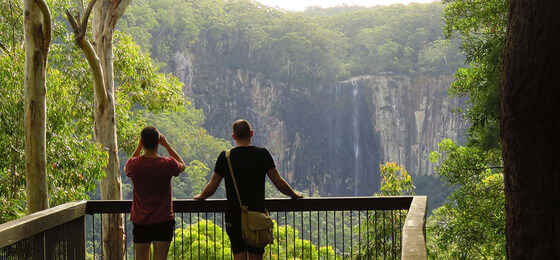
We will meet at the Minyon Falls Picnic Area at 8am then head along the path that follows Boggy Creek up to the Rummery Park Campground. There we will stop for a snack and a cuppa before heading back the same way to Minyon Falls. An easy walk though the path is a bit rough in places. Boggy Creek walk is an easy, short walk that allows you to meander through the rainforest at your leisure between Minyon falls and Rummery Park campground in Whian Whian State Conservation Area. The walk is a great one for the kids and is popular throughout the seasons. In the cooler months, it’s much quieter and you might even find you have the area all to yourself. Along the way back we may stop for a swim in one of the many pools near the creek side section of the walk. This area is lovely; large turpentine trees, water gums and brushbox line the creek, as well as blackbutts and flooded gum. After this we will head back and take in the breathtaking views at Minyon Falls lookout, where Repentance Creek plunges over 100m, flowing down over enormous cliffs that were once part of the Mt Warning Volcano. Grade 2, Leader Kerrie 0432 872 148
Apr
26
Mt Cobberas Wilderness Apr 26 - May 1
Mount Cobberas
26-04-2026 06:00 – 01-05-2026 22:00
Mt Cobberas 1 and Mt Cobberas 2 are my spiritual hiking peaks, overlooking Cowombat Flat where the Murray River rises. Don and I were introduced to this wilderness area at the southernmost end of Kosci National Park when we were students, by 'old Norm' who ran the Buchan General Store. We are drawn back periodically and would love to share it. You would need to be in Melbourne for an early drive with us on March 12, or driving down from Canberra through Jindabyne that day. All but the last day is offtrack. The twin peaks are around 1800m elevation and they look east over the Byadbo WIlderness area, north to Mt Pilot (1800m ) and Kosci. The VIctorian Alps are seen in the distant west. This is rugged country with the Australian Allpine Walking Trail passing under the peaks to the west. Grade 4: more info, Leader Steve 0414 312 917    Assistant leader Don.  
May
02
Christies Creek - Sat 2nd May
Mooball National Park
09:00 – 16:00
A shaded walk in Mooball National Park through pretty palm-filled gullies, grass trees, flooded gums and red cedar. We will follow an old fire trail then a walking path downhill to Christies Creek. It can be overgrown in places. We will have a cool break at the gently flowing creek. We walk along the creek for a short distance then cross it on a good log. Bring morning tea and lunch. The circuit then continues through the rainforest uphill along a walking path. Grade 3 with some downhill and uphill but a reasonable grade, roots and uneven path. About 10km, approx 4 hours. Leader Lucy Baker 0420664631; lucy.baker@path2u.com.au
May
16
Billinudgel Nature Reserve 16 May 2026
Billinudgel Nature Reserve
09:00 – 14:00
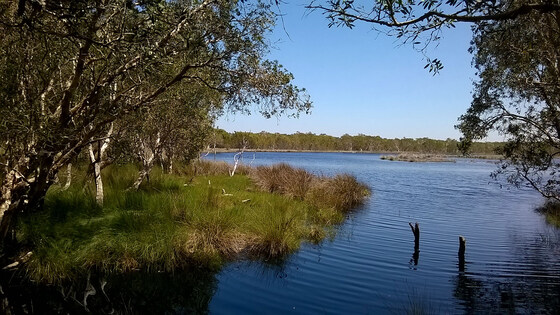
Starting an at Flinders Way Ocean Shores, we walk North on the Optus trail through Bangalow palms, eucalypt forest,  and paperbark  scrub before diverting east to the beach.  We return from the beach along the Central trail past majestic hoop pines and back to the start of the trail. The walk is about 7km's with some uneven surfaces and probably some creek crossings which will result in wet feet, old sand shoes or sandles are a good option. The walk is grade 2 or 3 and should be easy for most people. It's a beautiful, half day, loop. Bring, shoes that you don't mind getting wet, drinking water, morning tea/lunch hat etc. and swimmers. Leader Paula 0427667791
May
17
Cougal Cascades Birthday Walk- Sunday 17 May
Cougal Cascade
08:30 – 16:00
I would like to celebrate my birthday with walking friends. A half day walk to the Cougal Cascades and Currumbin creek in the luxuriant rainforest of Springbrook National Park and lunch or drink at a local cafe on the way out in Currumbin Valley. Easy walk along a highly accessible path to the old timber mill and then along a dirt track and crisscrossing Currumbin Creek to the waterfall above Cougal Cascades. We'll swim at one of the pools and move onto a cafe for lunch and cake. Email with final details sent out to registered walkers a few days before the event once the weather forecast is known with suggestions for carpooling. Grade 3 Leader David Roland Enquiries; david@davidroland.com.au
May
21
Gibbergunyah Range Road to Rocky Creek Dam- Thur May 21
Rocky Creek Dam
08:00 – 13:00
We will meet at 8am at the Rocky Creek Dam parking area and organise a quick car shuffe to the starting point at the entrance of the National Park on Gibbergunyah Range. There we need to cross the creek - bare feet or water shoes? - and walk up the road through tall eucalypts and rainforest. When we reach the top of the Scrub Turkey Walk we will head down the narrow track through remnant rainforest and then, lower down, rainforest that was regenerated using the Woodford method starting in the 80's. When the dam was completed, the surrounding land that had been cleared for dairy farming was weed infested with lantana and camphors, among others. Ralph Woodford invented his method and we will witness the stunning results. Then we reach the beautiful Rocky Creek Dam and cross the spillway, which, depending on the amount of recent rainfall, is another opportunity for wet feet. Back at the picnic area we will welcome all to stop for a cuppa and a chat.  Grade 3, Leader Kerrie 0432872148
May
30
Blue Moon night walk - 30 May, Goonengerry National Park
Goonengerry National Park
17:00 – 20:00
We will walk under the light of the moon and bathe in the forest at nighttime – experience another world. 31st May is a 'blue moon' (second moon of the month) but we will walk the Saturday evening before because the moon rises earlier and gives us greater light in the tall forests. We meet at Goonengerry National Park, walk along an open trail without artificial light, spend 20 minutes at a sit spot, and then find our way through the forest to the waterfall to view Wanganui Gorge in full moonlight. For those who would like to stay on, we'll finish with a hot cuppa. Grade 3 About 5 km 2-3 hours. You will need a headlamp, preferably a red light one for low light, and something to sit on. Leader David Roland Email: david@davidroland.com.au
Sep
18
Evans Head Chinaman's Beach Thur Sep 18
08:00 – 14:00
Some beach and some heathland, maybe some wild flowers in Spring. Grade 3 Leader, Kerrie 0432872148
Sep
01
Ladakh, India: 4 Sep '26 Trek
01-09-2026 00:00 – 28-09-2026 02:00
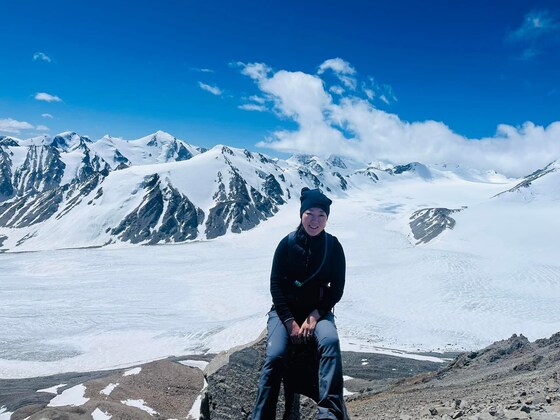
This is NOT a classic trek.  Classic treks = lots of people, lots of social media and lots of guide books and not much adventure or discovery to be had.  This trekhas all the makings of a classic: mountains, rivers, huge sky, high passes, villages, monasteries, agriculture, people, wildlife, ancient petroglyphs and trekking in some of the most remote regions in the Himalaya – and of course the excellent service, great food and good company that we know Indian Himalayan Excursions is famous for – but without the other trekkers. Dates: Leaving Australia 4 September. Number of days: 28Day 1 is flying into Delhi, Day 28 is flying from Leh to Delhi. Number of trekking days:20 Including rest days plus 2 day hikes from homestay Number of trekkers:Minimum 6, maximum 12 Cost: $AUD4300 Included All meals and snacks while on trek, ie from day 3-25 Tents and homestay accommodation Sleeping bags and mattress Staff (cooks, guides etc) Porterage by horse Hotels (double occupancy) in Manali and Leh Transport from Chandigarh to Manali, then all vehicle transport until arrival in Leh at the end of the trek Dinner and breakfast in Manali and Leh Not Included Lunch Manali and Leh Tips Any excursions outside of Leh on days 26 and 27 Flight Delhi to Chandigarh (approx. $60) and flight Leh to Delhi (approx. $200)   For the trek there is no extra charge for single supplement.  Trekkers not wishing to share a tent will be accommodated at no extra charge.However there is a single supplement charge for hotels of $110.   Single rooms are not likely to be available in the homestay in Kardang. Day 1  Manali Arrive Delhi airport, breakfast in the airport and then take the flight to Chandigarh (1 hour) We will be met at Chandigarh airport by IHE drivers and begin the drive of 6 hours to Manali.  Our vehicles will be comfortable SUV style or if the group is at maximum, a bus.  There will be plenty of rest stops enroute.  Accommodation and dinner in Manali Day 2  Manali A day of rest and acclimatisation in Manali (2050 metres).  Manali is IHE’s hometown.  A small town easy to negotiate on foot to the market area, the Hadimba Temple, old Manali and the last chance to purchase forgotten items and eat city food.  Day 3 Kardang From Manali the road climbs through conifer forest with massive Himalayan cedar to the entrance to the Atal tunnel.  The tunnel cutting through the Himalaya is 9 kilometres long and is the longest tunnel in the world above 10000 ft.  On the other side in Lahaul, the change in vegetation is marked – from forest on the south to a much drier landscape in the rain shadow of the Himalaya on the north.  We turn west and 3 hours drive from Manali arrive at the homestay in Kardang village (3500 metres).  An afternoon exploring the village, 900-year-old monastery and surrounds.   Day 4 Kardang Our first acclimatisation hike is to the Gangstang Glacier, pictured below.   We drive 1 hour from the homestay to the 17th century monastery at Shashur.  It’s a steady climb through woodland and into alpine meadows: flowers and juniper and spectacular mountain views.  We are likely to see Lahauli shepherds who bring their flocks to high pasture in summer.  Our high point near the toe of the Gangstang Glacier is around 4000 metres.  Day 5 Kardang Today’s hike is from Kardang on an ancient pilgrimage path which Hindu and Buddhist pilgrims follow in summer.  The pilgrimage is to complete the kora (circuit) of the holy mountain of Drilbu Ri.  The walk is through pea and barley fields into alpine meadows with huge views to Gangstang and across to Chandra River to Keylong and the Shikar Beh range. We reach 4450 metres at Khindang and our kora is completed with a jeep ride back to Kardang. Day 6 Purne After 2 good acclimatisation days we are ready to enter the high country of Zanskar and Ladakh.   We drive over the 5100 metre Sinnku La into the southern Zanskar Valley and follow the Kargiak Chu (river) though severalsmallvillages to reach Purne, a tiny village at 3700 metres.  At Purne the Kargiak Chu and the Tsarap Chu meet to form the Zanskar River which is a major tributary of the Indus River.  In winter when the cold is intense and the passes are covered in impassable snow, the frozen Zanskar River, the Chadar is the only way for local people to travel through a frozen land. Day 7 Phugtal Monastery A 2 hour easy walk brings us to one of the most breathtaking sights of the trek.The 15th century Phugtal Monastery is built around a natural cave and appears to hang like a honeycomb from the cliff.  The yellow hat monks of the Gelug school of Tibetan Buddhism are welcoming and we will spend the day exploring the monastery, especially to see the magnificent paintings and thankas.  Camp today is at 3850 metres. Day 8 Tantak We follow the Tsarap Chu along a narrow track with a stream crossing near the village of Tantak.  Tantak is an isolated, very small, traditionalZanskari village relying on marginal agriculture for its survival. We camp near the small monastery on the edge of the river at 4000 metres. Day 9 Tantak A rest day with a chance to visit Shade village at 4240 metres   Shade is considered one of the most isolated and highest villages in India, “if not the world”.  For 6 months of the year the 70 residents are cut off from the rest of the world when the extremely harsh winter arrives.   Day 10  and 11 Yarshun We leave camp and climb gradually to NiyaloKhontse La.   The 4820-metre pass offers magnificent views back to the Shade valley and ahead to Gotunda La and a beautiful alpine lake at the base of it.  We descend to the base of Gotunda La and then climb steadily again to the pass at 5140 metres and a vista of peaks and glaciers as far as can be seen.  We drop into a narrow gorge and pass though to camp at Yarshun at 4000 metres.  Camp on Day 10 is flexible with a number of options depending on weather and the strength of the group. Day 12 Satok The magnificent Tsarap Chu is our constant companion today as we follow it through grazing meadows, crossing the Zara Chu on an improvised bridge before camp at 4010 metres Day 13 Tsok Metsik Another good day’s walk along the Tsarap Chu, easy walking with a number of small passes.  Camp at 4000 metres Day 14 Brandy Nullah We reach the Manali to Leh highway early afternoon where our vehicles will be waiting to take us to camp near Gian.  We camp alongside our old friend the Tsarap Chu at 4200 metres.  We have left Zanskar and now inLadakh.  The region we will be trekking in is called Changtang, the southern section of the vast Tibetan plateau. Day 15Lamaguru We follow the highly braided Tsarap Chu which has cut eroded banks in the most remarkable shapes.  The earthy colours of the Changtangtwisted landscape are other worldly and it is a big day for photographers. We are now in Tibetan blue sheep (bharal) country and often see prints of snow leopard or wolf in the muddy riverbed. We cross the braided river a few times and camp at 4260 metres where the Umnag Chu meets the Tsarap Day 16 Tsarap River Camp Today is nature at its rawest with millions of years of geological time on display.  The landforms are stunning, a backdrop to the clear, turquoise blue waters of the Tsarap.  Fossilised shells are common, from a time when this was the ocean floor, 200 million years ago in Tethys time.  We cross to the far bank and camp at 4550 metres. Day 17 Pangpo La base Straight out of camp we enter a narrow gorge which requires some rock hopping to negotiate the river that has cut it.  The gorge narrows to be only a couple of metres wide with towering cliffs leading to soaring mountains above us.   It then opens enough for us to camp on the edge of the river on grassy banks, a truly spectacular camp at 4850 metres. Day 18 Kun Tso This is a tough day for (hu)man and beast, a day when you marvel at the skill and toughness of the ponies and pony wallahs.  Leaving our comfortable,relatively spacious river camp we re-enter the gorge often having to help establish the path for the ponies.  When IHE pioneered this trek in 2016 the route had to be found and made – now the route is known but is so rarely used it is often blocked.  We exit the gorge to a steep climb, a scramble for us and ponies but finally we reach more solid footing and the top of Pangpo La, 5239 metres.  We follow a stream down and into the open valleys of Rupshu to camp at 5000 metres near Kun Tso near a natural spring that gushes from the earth. Day 19 Kun Tso After yesterday’s effort a rest day is in order.  Some will do that -rest -but others will be tempted to explore this amazing place.  Every direction beckons the curious, the geology is remarkable, wildlife like Blue Sheep (bharal), Great Tibetan Sheep (argali), Wolf (shanku) and Tibetan Wild Ass (kyiang) have all been seen here on this rest day.  The small lake Kun Tso is a magnet for bird life, especially Brahminy duck.  At night it is a must to leave the warmth of your tent to see the stars like you have never seen before.  Here at 5000 metres with clear air the stars and especially the milky way are memorable. Day 20 Kyiang Shisha We cross the valley floor in a circuitous route to visit some hidden sights; theArgali valley and the natural springs to camp at 4844 metres at KyiangSisha, the “Graveyard of the Kyiang” under a towering rock face.  As with almost every day on this trek, those who feel they still have some walking left in them, have endless opportunity to explore from camp. Day 21 Manechan The valley opens up and the river is wide and braided.  At times the river is above ground but mostly it’s below welling above ground in springs.  We pass under Karpa with its unusually shaped summit and hanging glacier and cross the Phirtse Phu to camp at 4680 metres on the grassy bank.  The Phirtse Phu is the main feeder river to Tso Moriri, the lake we will reach in a couple of days.  Kyiang are commonly seen and snow leopard were seen by an IHE group here in 2016 and their tracks on almost every trek.  Day 22 Kunmochey We follow the Phirtse Phu, very pleasant walking along its grassy bank.  Either side the walls are steep, and the valley closes the further we walk along it.  Blue Sheep, marmot, kyiang, pika and fox are often seen and snow leopard and wolf tracks and kyiang bones, the remains of their prey, litter the valley floor.  Wecamp at 4616 metres under ‘snow leopard cave’ which can be visited in the afternoon. Day 23 Kyiangdom This is a memorable day.  We follow the Phirtse Phu to its end and climb above the river, turn the corner to the spectacular view of Tso Moriri with the highest peaks in Ladakh, the 6600 metre Chamser and Lamster Kangridominant across the lake.  We drop to the lake but stop at the petroglyph site ‘discovered’ by IHE in 2016 and documented in 2018 (see Recommended Reading).  Kyiang are common here as are the migratory bar-headed geese in Tso Moriri.  Our camp at 4588 metres is nothing short of stunning:views across and down the lake, the Mentok peaks above camp and behind us in the distance the mountains of Spiti. Day 24 Korzok We walk the length of Tso Moriri admiring its many colour changes but at times cursing the wind if it is blowing and the deceptive distance.  But all things must end and we reach the tiny village of Korzok at 4600 metres, a monastery and a road.  This is civilisation, the end of the trek. Day 25 Leh Like all drives there will be times when you wish the drive to Leh was over.  But do take in the spectacular scenery, remember you are seeing the mighty Indus, one of the world’s great rivers and in a short time you’ll be enjoying a hot shower and perhaps a strong coffee and cake at one of Leh’s many coffee shops. Days 26 and 27 Leh Leh is a wonderful place to wander in, visit the old fort, Shanti Stupa, the Muslim bakeries, do some shopping, observe life on the Mall, have yet another coffee and cake.  There are also some great day trips from Leh; Hemis and Thiksey Monasteries or even a day’s rafting on the Indus.  IHE has excellent contacts in Leh and anything can be arranged. Day 28 Delhi The flight to Delhi is reliable and many will choose to fly Leh to Delhi and take their international flight the same day.  Make sure you get a window seat as the Leh to Delhi flight must be one of the most amazing flights in the world.   Recommended reading Wild Places Wild Hearts Nomads of the Himalaya by Allen Smutylo  2007 The best book I have read of the Changtang and a beautiful coffee table book well worth owning Ancient Futures by Helena Norberg Hodge 2009 Cultural change in Ladakh A Journey in Ladakh by Andrew Harvey 2003 The link below is to a paper written by Bill Boyd when we ‘discovered’ an extensive site of Buddhist and pre-Buddhists petroglyphs near Tso Moriri in 2018 More info: Stephen Millard    0414 312 917
Oct
16
Minyon Falls- Thur Oct 16
08:00 – 12:00
The walk from the wet sclerophyl forest at the top to the dense cool rainforest at the base of the Falls gives a great transistion betwen the two extremes. Opportunity for a swim at the bottom and a picnic lunch at the finish. Grade 3, Leader Kerrie, 0432 872 148
Sep
01
2027
Indian Himalayan Grand Shepard's Traverse Trek - Sep '27
Manali
01-09-2027 07:00 – 26-09-2027 09:00
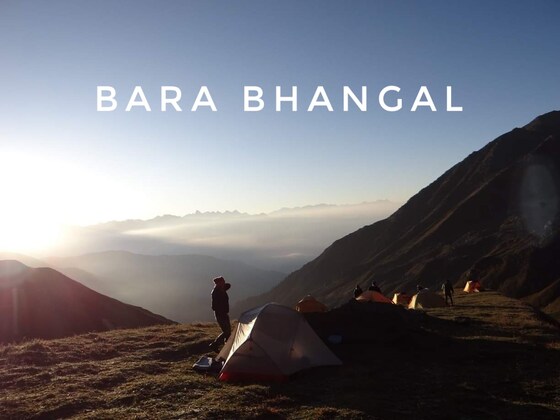
Departure Sept 1 From Manali (2200m) we begin with a short trek in the mountains surrounding the beautiful Kullu Valley to acclimatise to higher altitudes, and then follow the Grand Shepherd’s Traverse from Kullu to Kangra Valley. The trek is through one of the most remote corners of Himachal Pradesh, following an ancient and remote shepherd’s trail between the Kullu and Kangra Valleys. Beginning in dense forests and alpine meadows above Manali, the trek crosses the KaliHind Pass to the ancient Gaddhi village of Bara Bhangal in Kangra, the most scenic valley in Western Himalaya. Each trekking day is a delight with tremendously varied landscapes and a great variety of Himalayan flora and the possibility of seeing fauna such as brown bear, black bear, fox, snow leopard, musk deer, monkey and the Giant Indian Flying Squirrel. On the trek we pass through remote Gaddhi villages isolated by heavy snowfall for most of the year. There are spectacular views of the rugged Dhauladhar Range especially crossing Thamsar Pass but then on descent, another world; a softer landscape of meadows, forests and the cascading waterfalls and tiny villages hanging on the sides of the mountain slopes. We finish at Bir, a small Tibetan village with a monastery. From Bir we drive to Dharamsala, the home of the Dalia Lama and the Tibetan Government in exile.           Book a 'ticket' below as an expression of your interest and phone Steve to express this interest 0414312917